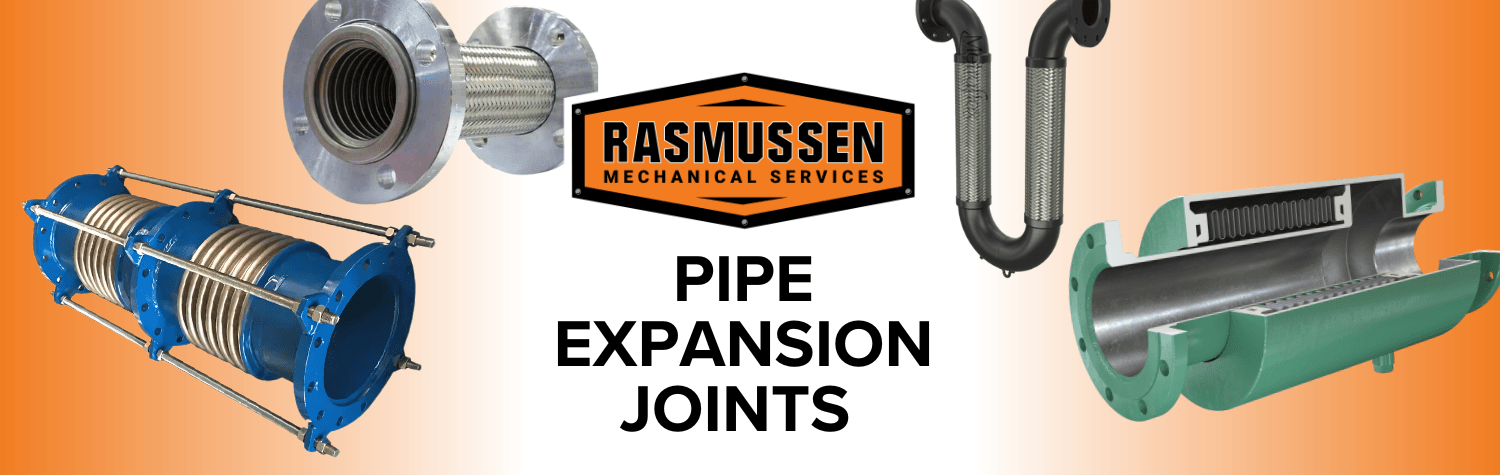
A pipe expansion joint plays a crucial role in managing the thermal expansion and contraction of piping systems. As temperatures fluctuate, a piping system will expand when it heats up and contract when it cools down. Without a proper pipe expansion joint, these forces can damage the system, cause leaks, or even lead to catastrophic failure. These joints are designed to absorb thermal movement, reduce vibrations, and accommodate movement from settlement or shifting foundations, ensuring system integrity.

Famous Image Highlighting Thermal Expansion Forces Acting On A Rail Way
Why Pipe Expansion Joints Are Necessary
A simple example of thermal expansion shows the immense force at play. Consider a 100-foot section of 4” steel pipe. When heated to 200°F, the pipe will exert over 120,000 pounds of force due to expansion.
Ambient temperatures can also affect the pipe’s behavior. For instance, gas lines running across rooftops can be exposed to extreme heat, causing the pipes to warp and twist like a snake. This force can be destructive without proper compensation in the system.
Calculating Thermal Expansion
The rate of expansion varies based on the material of the pipe. Different metals expand at different rates, making material selection crucial for system design. For example, copper expands more than steel under the same conditions. The ASHRAE standards provide guidance for calculating the thermal expansion and flexibility of systems. This allows designers to anticipate how much expansion a given material will undergo in a specific application.
Types of Pipe Expansion Joints
Pipe expansion joints come in a variety of designs, each with unique characteristics suited for different applications. Here’s a look at some common types:
Internally Pressurized Expansion Joints
Corrugated Bellows: These joints feature a small face-to-face dimension and are relatively inexpensive. They are often used in high-temperature applications, such as exhaust piping. While effective for certain movements, they are limited to axial movement and require anchoring and guiding. Their low movement capacity can be a disadvantage in larger systems.
Packed Joints (Slip Joints): These can be repacked while in service, making them ideal for high-pressure steam applications, such as in university steam tunnels. While capable of absorbing large amounts of expansion, they develop high anchor loads. The chrome plating can become damaged over time, leading to leaks. This type of joint will require maintenance over its lifespan.
Externally Pressurized Expansion Joints
Externally Pressurized Bellows: In this design, the pressure is applied externally to the bellows, allowing for longer, more stable axial movement. The increased stability makes it suitable for applications where more significant movement must be absorbed.
Copper Compensators: These offer axial movement only and are built in-line. The pipe itself acts as a liner to protect the bellows, while the outer casing serves as a shield. These are reliable and maintenance-free, often used in heating systems or other stable environments.
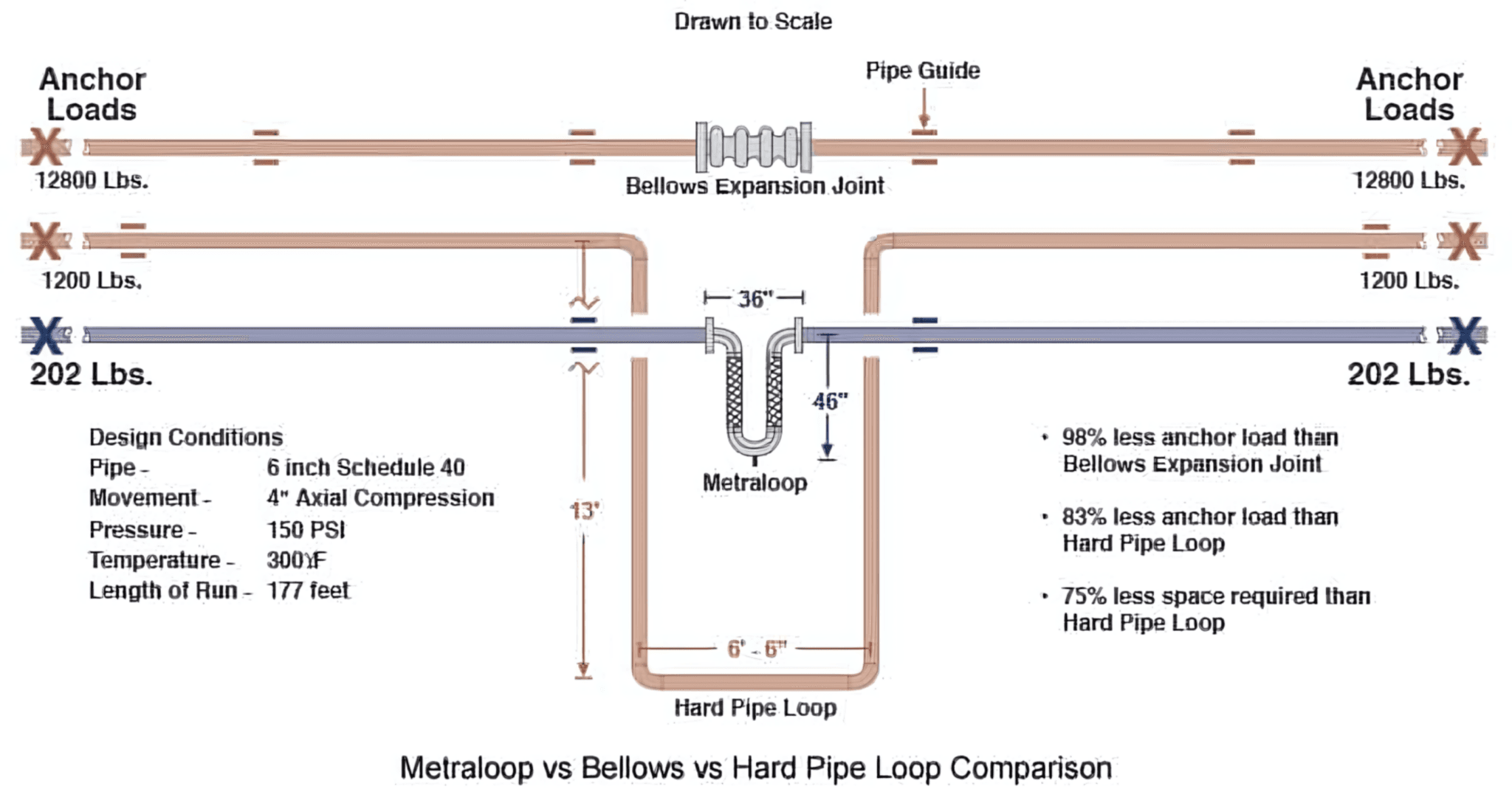
Picture Courtesy of Metraflex
Metraloop
Metraloop: A versatile joint that handles movement in any direction (axial, lateral, and angular). The Metraloop can be constructed of various materials such as carbon steel, stainless steel, and copper. It has the lowest anchor load of any expansion joint and requires minimal guiding, making it a popular choice for high-movement areas. However, it is often more expensive than traditional joints.
Pipe Expansion Joints for High-Pressure Steam Systems
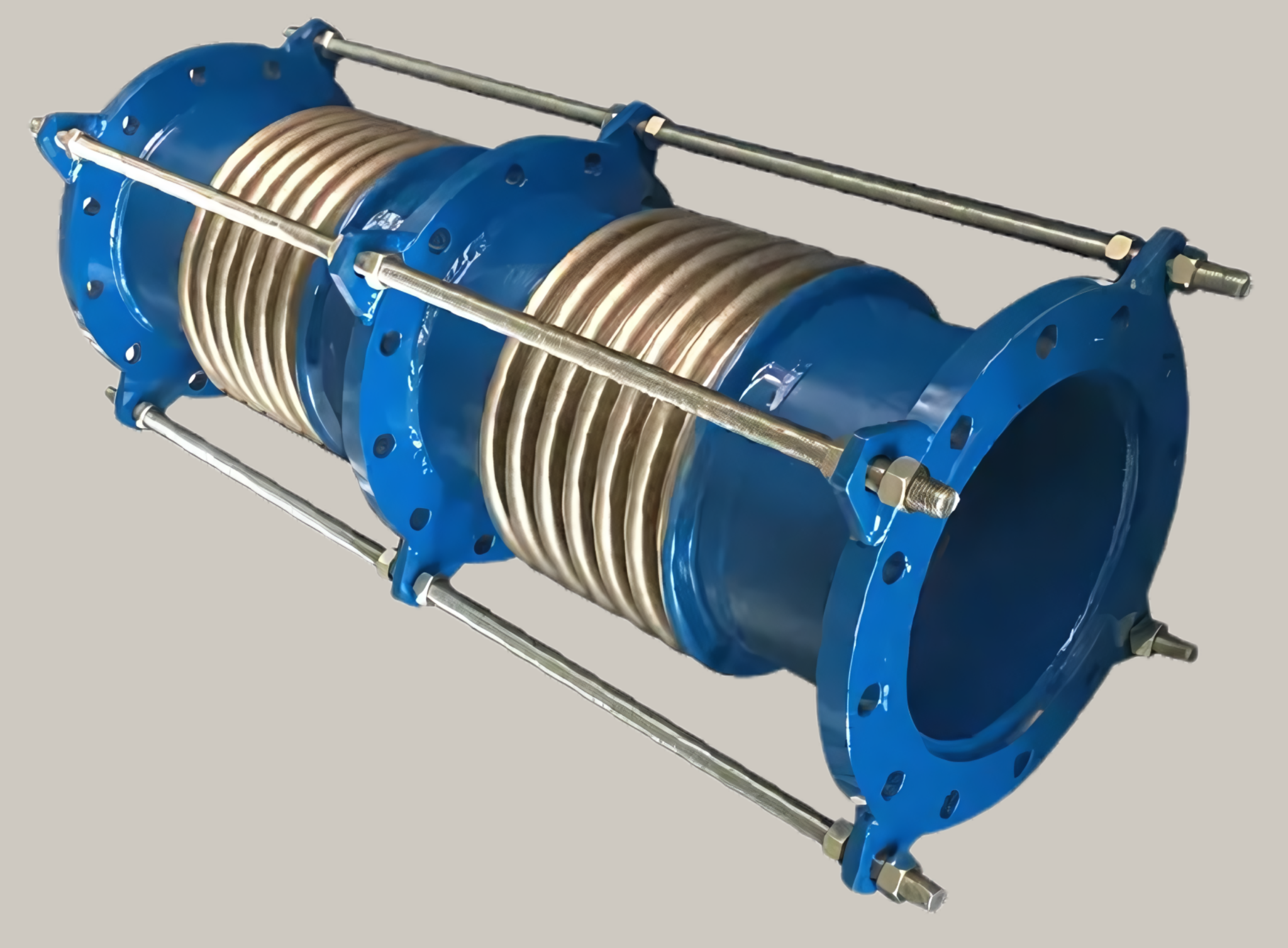
High-pressure steam systems demand special consideration for a pipe expansion joint due to the extreme conditions involved. Traditionally, hard pipe loops are used to absorb expansion, but they require significant space. When space is limited, dual bellows or universal tied bellows can be used as a more compact solution. These types of expansion joints are engineered to handle both axial and lateral movement while minimizing the space needed for installation.
Anchor Load Calculations
Anchor loads must be carefully calculated to ensure system stability. The total anchor load on an expansion joint is the sum of three components:
1. Pressure Thrust: The force exerted by internal pressure on the bellows, causing it to stretch out. This is calculated as:
Pressure Thrust = Pressure × Bellows Effective Area
Use the maximum operating pressure, often the test pressure, to ensure safety. The effective area is based on the mean diameter of the bellows.
2. Deflection Load: The force required to bend or move the bellows. It’s calculated as:
Deflection Load = Spring Rate × Movement of the Joint
3. Frictional Resistance: This accounts for the resistance created by the pipe’s supports, such as hangers and guides. It’s calculated as:
Frictional Resistance = Total Pipe Weight × 0.03
Proper Placement of Expansion Joints in a System
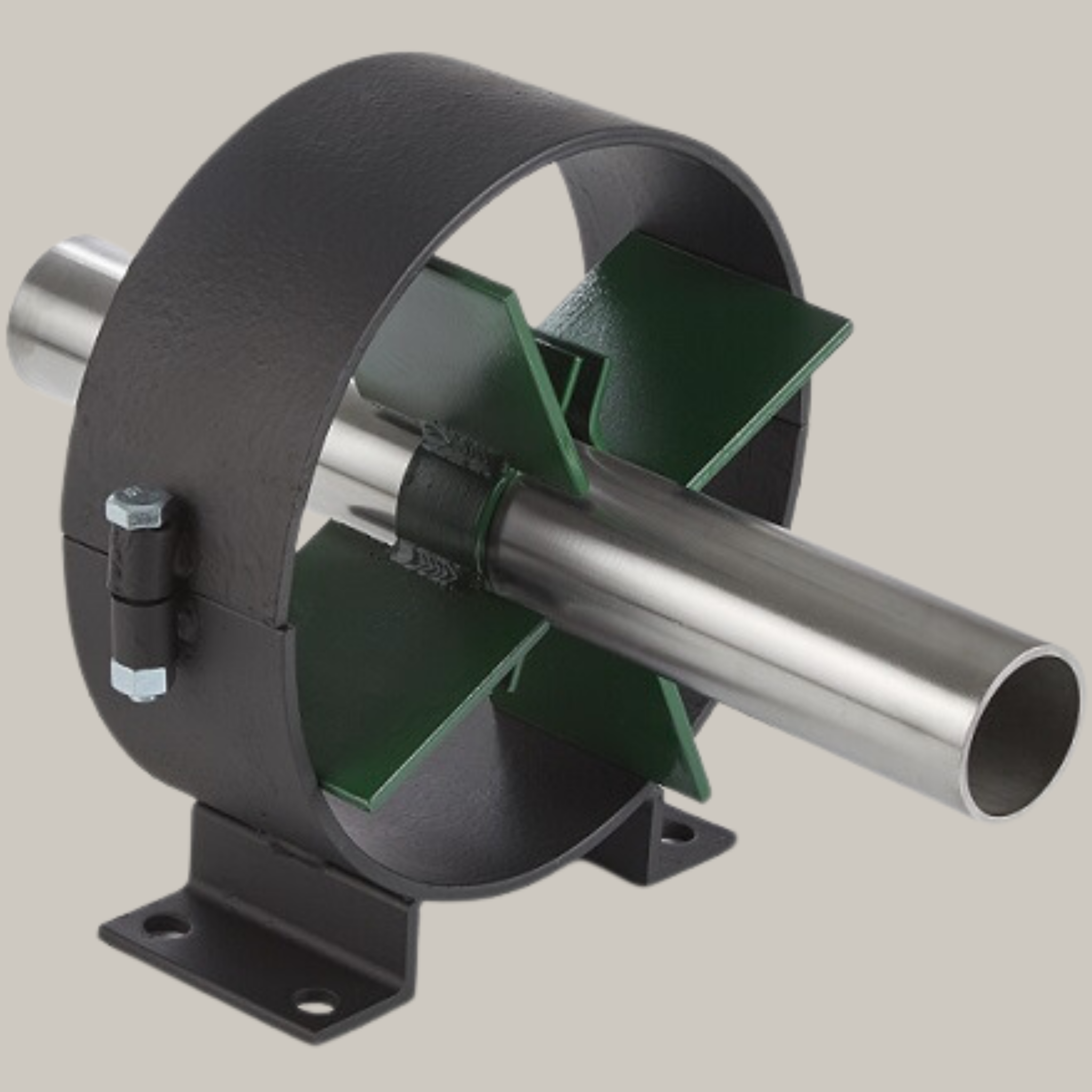 When installing a pipe expansion joint, proper guiding and anchoring are essential. Guides ensure that the pipe expands in a controlled, straight direction, preventing lateral movement or “snaking” of the pipe. A common rule of thumb is to place the first guide 4 pipe diameters away from the expansion joint. The second guide will be 14 diameters away, and the third guide 40 diameters away.
Hangers are not guides and should not be relied upon to control movement. Special attention should be paid to ensure that expansion joints are not installed back-to-back without an anchor between them. Proper anchoring ensures that the joint can function as intended and absorb the expansion forces safely.
For Metraloops, however, the guiding requirements are less stringent due to their design, but careful planning is still required to prevent system stress.