Boiler scale is one of those problems that seems 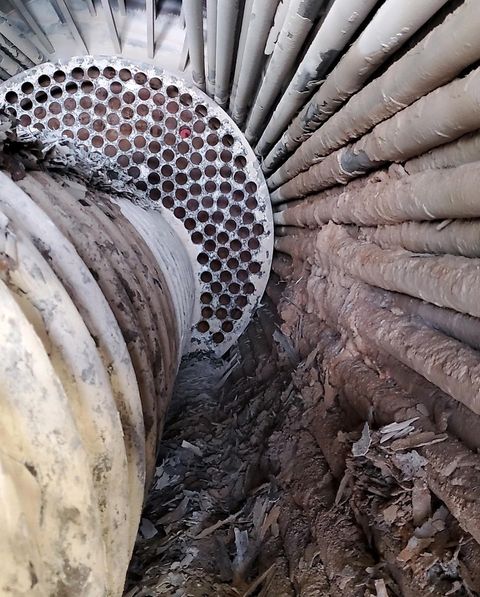 manageable — until it isn't. Left untreated, it drives up energy costs, causes tube leaks, and can put you in a position where you're looking at a repair bill measured in tens of thousands of dollars. The good news: there are options. The bad news: the right option depends heavily on how bad things already are and what type of boiler you're dealing with.
Here's a practical breakdown of what to do — and what to watch out for — when you're dealing with boiler scale.
Understand What You're Dealing With Your Steam Boiler
Before you do anything, you need to know how thick the boiler scale is. That single variable drives almost every decision that follows. Thin scale on a fire tube boiler is a very different problem than heavy scale on a water tube boiler — and treating them the same way is how facilities end up with bigger problems than they started with.
The cheapest and most effective first step is also the most underutilized one: get a borescope. A basic borescope can be picked up online for relatively little, and looking inside those furnace tubes will tell you more in five minutes than any guess from the outside. Furnace tubes absorb the most heat per square foot, so they scale first and fail first. Start there to assess the scale buildup on your boiler tubes and heat transfer surfaces.
Firetube Boilers: Online vs. Offline Cleaning
For fire tube boilers with relatively thin scale formation, online treatment with anti-scalant chemicals is a viable option. Your water treatment provider can add chemicals that gradually dissolve the scale without taking the boiler offline. It's less disruptive and less expensive — but it carries real risks if not managed carefully. Here's the problem with online chemical treatment: scale doesn't come off evenly. It comes off in chunks. Those chunks accumulate at the bottom of the boiler, can plug your blowdown lines, and can build up enough to bridge the gap between the boiler shell and the Morrison tube. When that happens, you lose the cooling effect in that zone, and you start seeing cracked welds, hot spots, and tube sheet damage. That's an expensive repair that can lead to serious boiler damage and potential boiler failure.
If you do pursue online treatment, two things are essential:
• Plan to open the boiler after 4 to 8 weeks to inspect for scale accumulation and mechanically remove any chunks that have built up.
• Work closely with your water treatment provider and boiler operator to assess whether continued online treatment makes sense given the rate of scale removal and water hardness levels.
Heavy scale is a different story. At that point, offline cleaning — typically using an inhibited acid wash — is often the more cost-effective and reliable path, even though it's more expensive upfront. Specialized companies can turn an offline cleaning around in roughly a week to 10 days. It's not cheap, but it's the sure thing for maintaining boiler efficiency and protecting metal surfaces from corrosion. There's also a third option worth considering depending on your boiler model: retubing. If the boiler design allows tubes to be dropped out through hand holes, it may be more practical to retube than to descale — especially when scale buildup is heavy enough that pulling a tube becomes a geometry problem (a 2.5-inch tube with a quarter-inch of scale on it is now a 3-inch tube trying to fit through a 2.5-inch hole).
Watertube Boilers: A Higher-Stakes Problem
Scale in a water tube boiler follows the same formation process, but the consequences of mishandling it are more severe. In a fire tube boiler, scale chunks that break free drop to the bottom of the shell — mostly out of the way, relatively easy to flush out. In a water tube boiler, those chunks land in tight bends and stay there. Sludge can run downhill to the mud drum during a cool-down cycle. Chunks of scale cannot. The danger is blockage. If a scale chunk blocks a furnace tube — the tubes with direct flame exposure — that tube loses the cooling water flow it needs to survive. The result is a burned-out tube, a serious failure that risks the entire boiler system. For that reason, the recommendation for water tube boilers leans much more heavily toward offline cleaning. There's simply no good way to flush scale chunks out of tight tube bends while the boiler is running. That said, if offline cleaning isn't immediately feasible, mechanical cleaning — essentially a rotary device run drum-to-drum through the tubes — is an option. It works, and it's used frequently. The limitation is thoroughness: if you miss a four-inch stretch of tube, that's a hotspot waiting to become a leak. An acid wash doesn't have that problem — when the pH stabilizes, you know the acid has reached and dissolved scale throughout the boiler tubes and heat transfer surfaces. When mechanical and chemical methods are combined sequentially, you often get the best of both.
The Short Version: Key Decision Points to Avoid Boiler Damage
• Thin scale on a fire tube boiler: Online chemical treatment may work — but plan for interim inspections and be ready to pull chunks mechanically to maintain boiler efficiency.
• Heavy scale on any boiler: Offline cleaning is usually the better call, even with the higher upfront cost, to prevent serious damage and corrosion.
• Water tube boiler with any meaningful scale: Lean toward offline cleaning. The risk of tube blockage and burnout is too high to manage casually.
• Not sure how bad it is: Get a borescope and look at the furnace tubes before you decide anything. This inspection helps monitor scale formation and supports better water treatment decisions.
Don't Skip the Borescope Inspection
It's worth repeating because it's the step most facilities skip. A borescope is an inexpensive tool that provides a quick and thorough inspection, taking minimal time while removing all the guesswork from your boiler scale treatment decisions. Furnace tubes are your highest-risk area—they see the most heat, they scale first, and they're the first to fail. Knowing what you're looking at before you commit to a treatment path can save you from costly mistakes, prevent serious damage, and maintain your boiler's efficiency. In this case, a clear picture of scale buildup really is worth a thousand words—and potentially thousands of dollars in avoided repairs and downtime.
Need Help Assessing Your Boiler?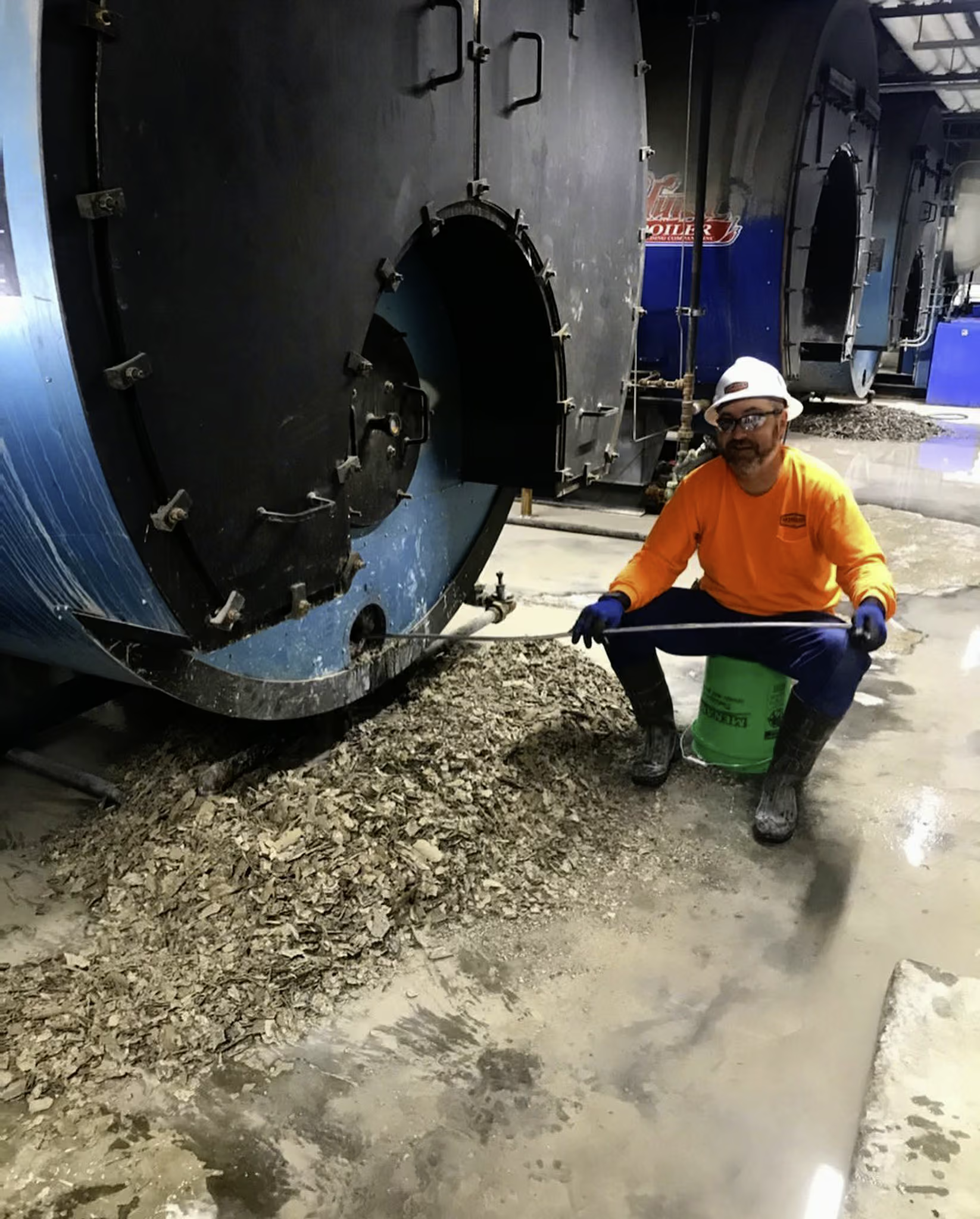
RasMech provides expert commercial and industrial boiler service, inspections, and maintenance across the region. If you're dealing with boiler scale and want to prevent boiler scale buildup that can damage your boiler tubes and reduce boiler efficiency, our experienced technicians can help you assess the scale formation on your boiler's piping systems and heat transfer surfaces. We offer thorough boiler inspections to identify scale causing minerals like calcium carbonate, magnesium, and silica deposits that form on tube surfaces and walls. Reach out to talk through your options for scale removal, water treatment, and preventing boiler scale to maintain your steam boiler's performance and extend its operation life.
Preventing Scale On Your Boiler Tubes
Preventing boiler scale is essential for maintaining boiler efficiency, reducing fuel consumption, and avoiding costly damage. Key steps include treating feedwater with water softeners and filtration systems to remove hardness minerals like calcium and magnesium before entering the boiler. Untreated fresh water brings in minerals that can quickly form scale, so proper feedwater quality is critical. Regular monitoring of dissolved solids, water hardness, and oxygen levels, combined with a proactive chemical treatment program, helps control scale formation, iron contamination, and corrosion risks. Maintaining optimal operating conditions—such as temperature, pressure, and routine blowdowns to remove concentrated solids—further reduces scale buildup. Regular inspections using tools like borescopes and professional mechanical cleaning ensure any scale deposits are detected and removed promptly, protecting boiler tubes and heat transfer surfaces. By managing these factors, facility managers can prevent boiler scale, extend boiler life, and maintain efficient steam boiler operation.