Upgrading a Building Automation System (BAS) is one of those projects that tends to get postponed—not because it doesn’t matter, but because it’s hard to define. How much will it cost? What actually gets replaced? Will it disrupt daily operations? Is it even worth doing right now?
This guide answers those questions in straightforward terms. Whether you’re weighing a full system overhaul or a targeted controls refresh, you’ll find practical guidance on costs, scope, timelines, and return on investment.
What Does a BAS Upgrade Cost?
The total cost depends on three main variables: building size, system complexity, and how much of the existing system you plan to replace.
Typical Cost Ranges
Building Size | Estimated Cost Range |
Small (under 50,000 sq ft) | $25,000 – $75,000 |
Mid-size (50,000 – 150,000 sq ft) | $75,000 – $250,000 |
Large facilities or campuses | $250,000+ |
These figures are planning-level estimates. Buildings with central plants, water-source heat pumps, or large numbers of VAV boxes tend to fall toward the higher end. A detailed site survey is always required for accurate pricing.
What Drives Cost?
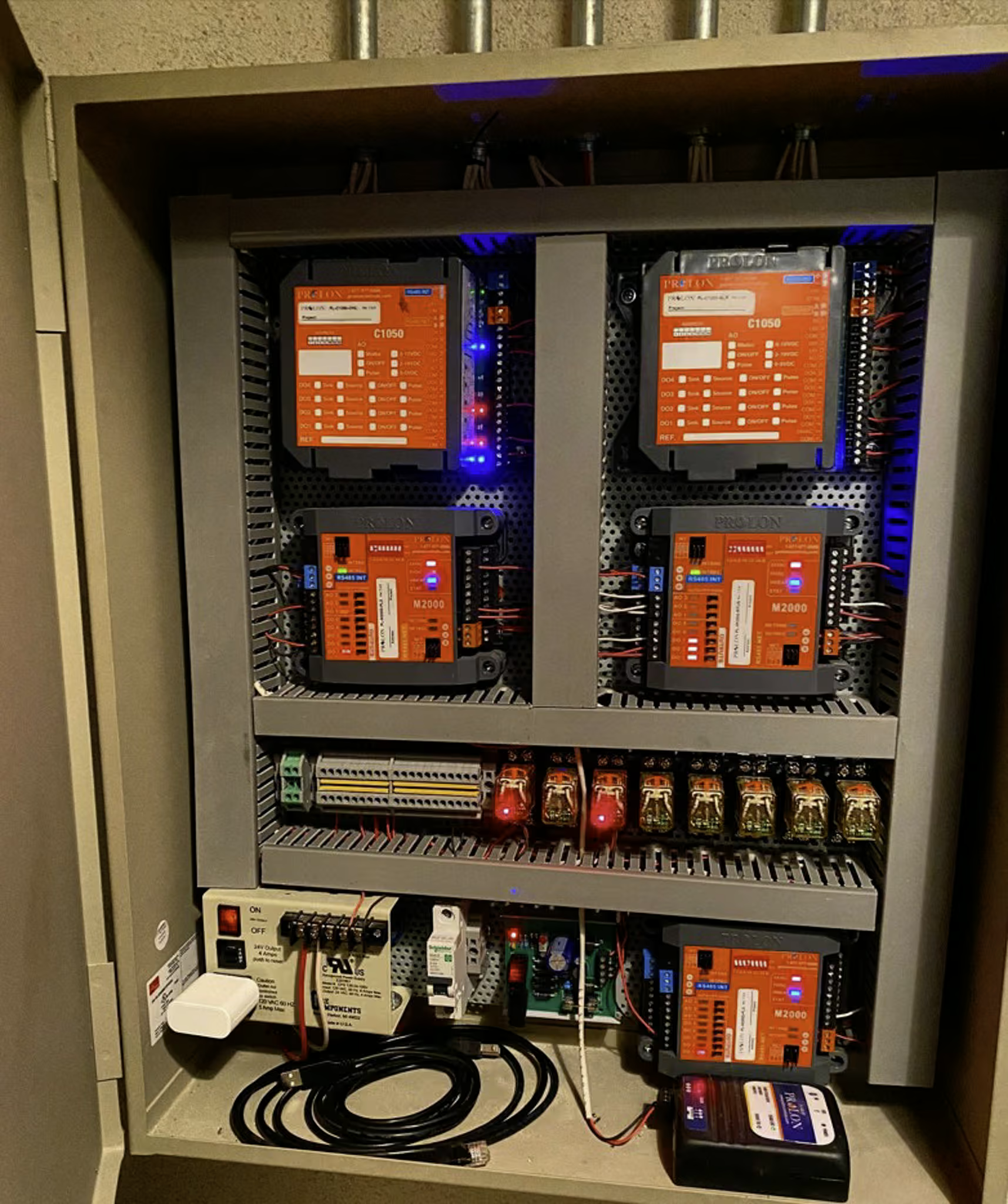 A BAS upgrade is a building-wide system, not a single piece of equipment. The biggest factors influencing cost are:
Number of control points. Every sensor, actuator, and device in the building represents a control point. More zones and more equipment means more cost.
Equipment type. VAV-heavy buildings require more controllers. Hydronic systems add valve and sequencing complexity. Water-source heat pump systems introduce loop coordination challenges.
Wiring and infrastructure. Older buildings often need new control wiring, panel upgrades, and network infrastructure. This is where projects most frequently exceed initial expectations.
Programming and graphics. This is a major portion of the budget and the area that determines whether the system is actually usable day to day.
Scope: partial versus full upgrade. This is the single biggest cost decision you’ll make, and it deserves its own section.
Partial vs. Full Building Automation Systems Upgrade
The scope of your upgrade has the greatest impact on both cost and long-term value. Here’s how the two approaches compare.
Partial Upgrade
A partial upgrade focuses on improving control capability without replacing every component. You’ll typically install new controllers and sensors while reusing existing actuators (including pneumatic devices via electro-pneumatic transducers). The work is usually targeted at the most critical systems first—air handlers, central plant equipment, or areas with the worst control problems.
This approach works well when budgets are tight, when you plan to phase the work over multiple years, or when the existing mechanical equipment still has useful life remaining. The trade-off is that legacy components remain in the system. Maintenance complexity doesn’t go away entirely, and performance improvements may be more limited than a full replacement would deliver.
Full Upgrade
A full upgrade replaces everything: controllers, sensors, actuators, wiring, and the front-end interface. Pneumatic systems are completely eliminated. This approach is best suited for buildings with persistent control problems, facilities where long-term ownership makes the investment worthwhile, and situations where simplifying ongoing operations and maintenance is a priority. The result is a clean, unified system that’s significantly easier to operate, troubleshoot, and maintain over time.
What A BAS System Upgrade Looks Like
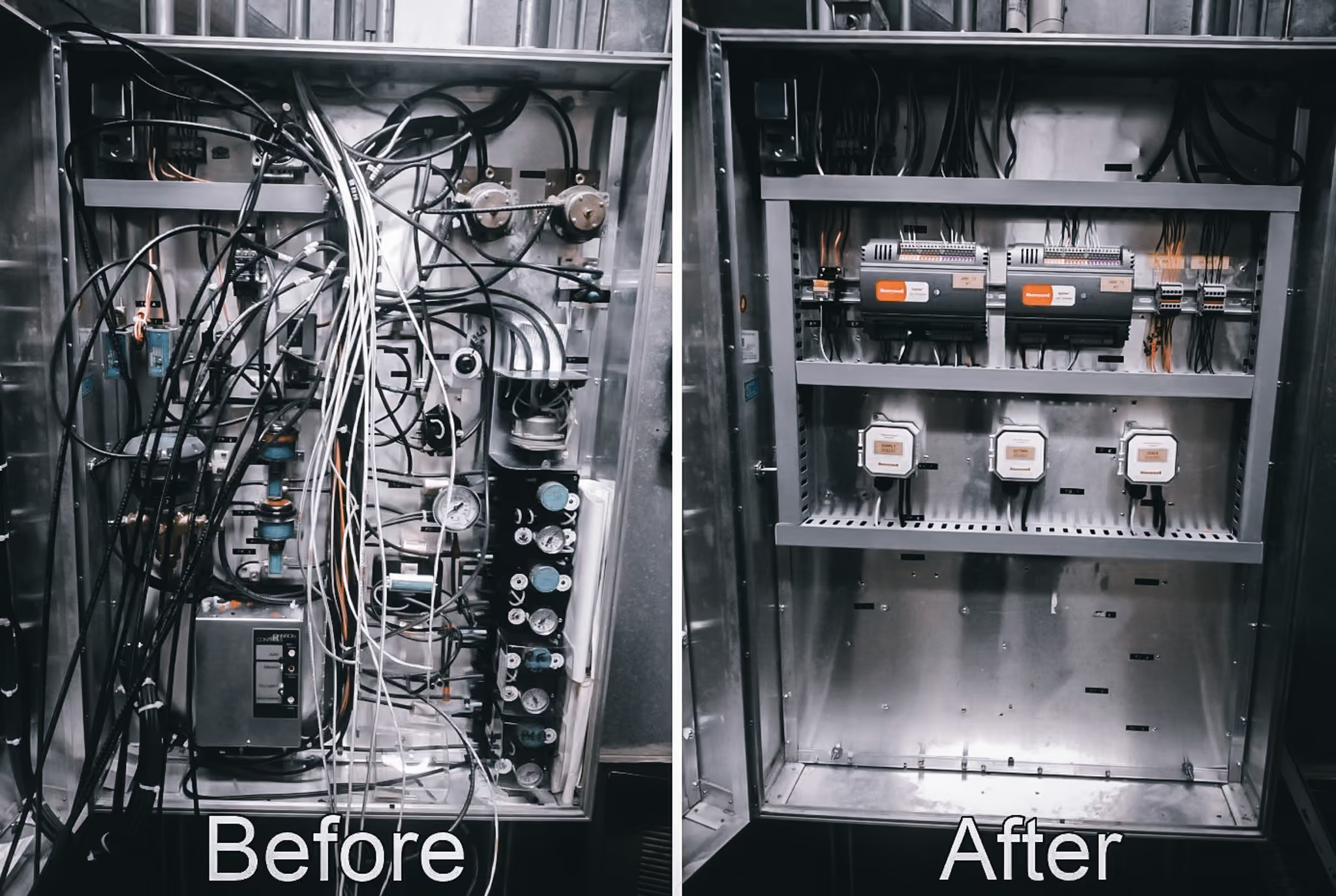 A well-managed BAS upgrade follows a structured sequence. Skipping or rushing any step creates problems downstream.
1. Site Survey and Assessment - The project begins with a thorough documentation of existing equipment, control devices, wiring infrastructure, and the current mix of pneumatic and digital components. Skipping this step is the most common cause of change orders and budget overruns.
2. Design and Submittals - The engineering team defines points lists, sequences of operation, control drawings, and equipment selections. This is the blueprint for the entire project.
3. Installation - Physical installation is typically phased—one system at a time, scheduled around building occupancy. Schools, for example, often have major installation work done over summer breaks.
4. Programming and Startup - Control logic is loaded, configured, and tested under real operating conditions. This is where actual system performance is created. Rushed programming leads to comfort complaints and inefficiency.
5. Graphics and Interface - The operator interface is built out with equipment graphics, alarm dashboards, scheduling tools, and trend data. This step matters more than most people realize—if the graphics are confusing or incomplete, the system won’t get used effectively.
6. Commissioning - Every sequence of operation is verified to confirm that equipment responds correctly and the system performs as designed. This is the quality assurance step.
7. Training and Turnover - This step is frequently undervalued, but it’s one of the most important. A BAS only delivers its full value if your operations team knows how to use it. Training should cover daily operation, alarm response, scheduling, and basic troubleshooting.
Common BAS Platforms
Most BAS upgrades involve one of these major platforms:
Johnson Controls (Metasys)
Siemens (Desigo)
Trane (Tracer)
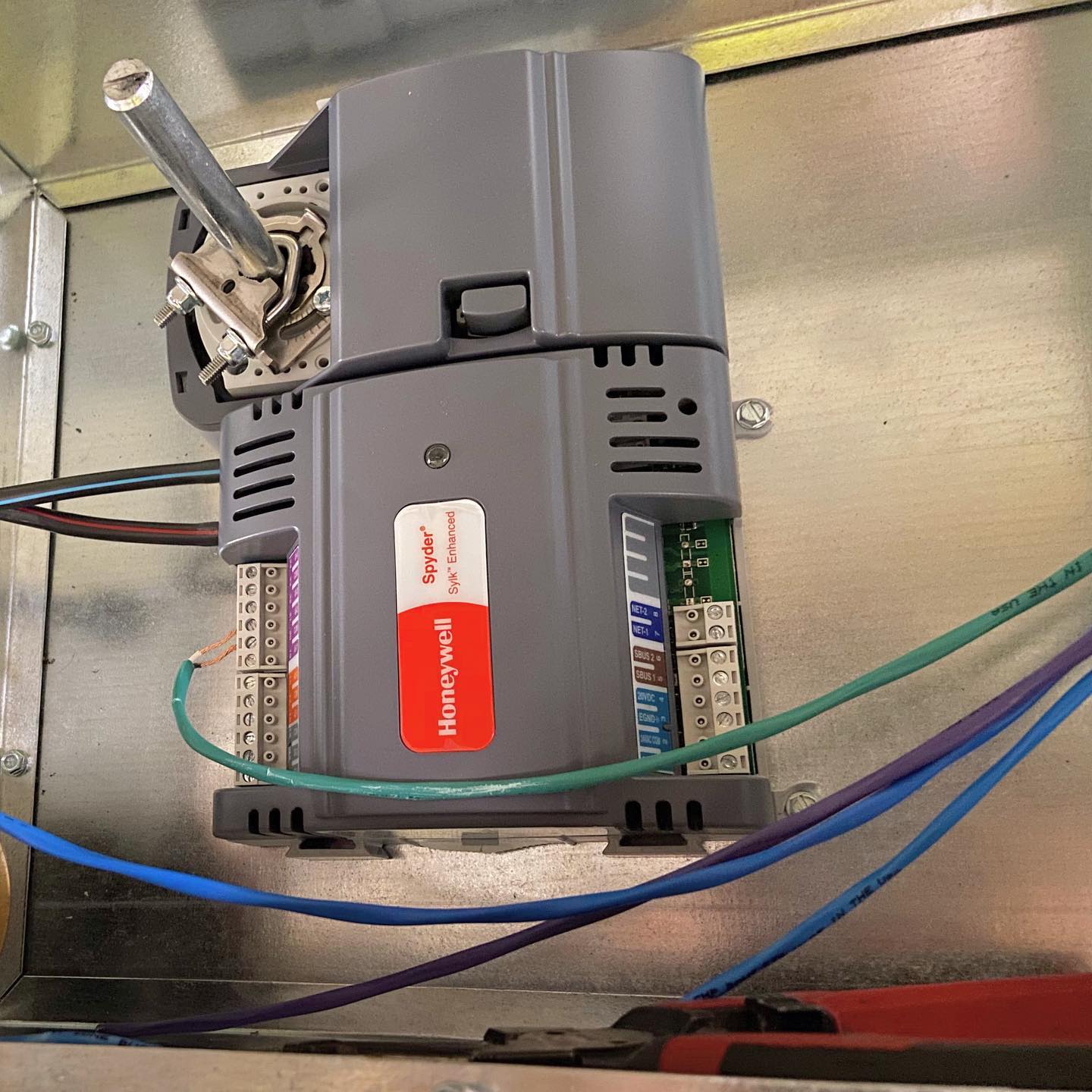
Honeywell (EBI / Spyder)
Schneider Electric (EcoStruxure)
The specific platform matters less than the quality of the design, programming, and long-term support behind it. A well-implemented system on any of these platforms will outperform a poorly implemented system on any other.
Managing Disruption During the Upgrade
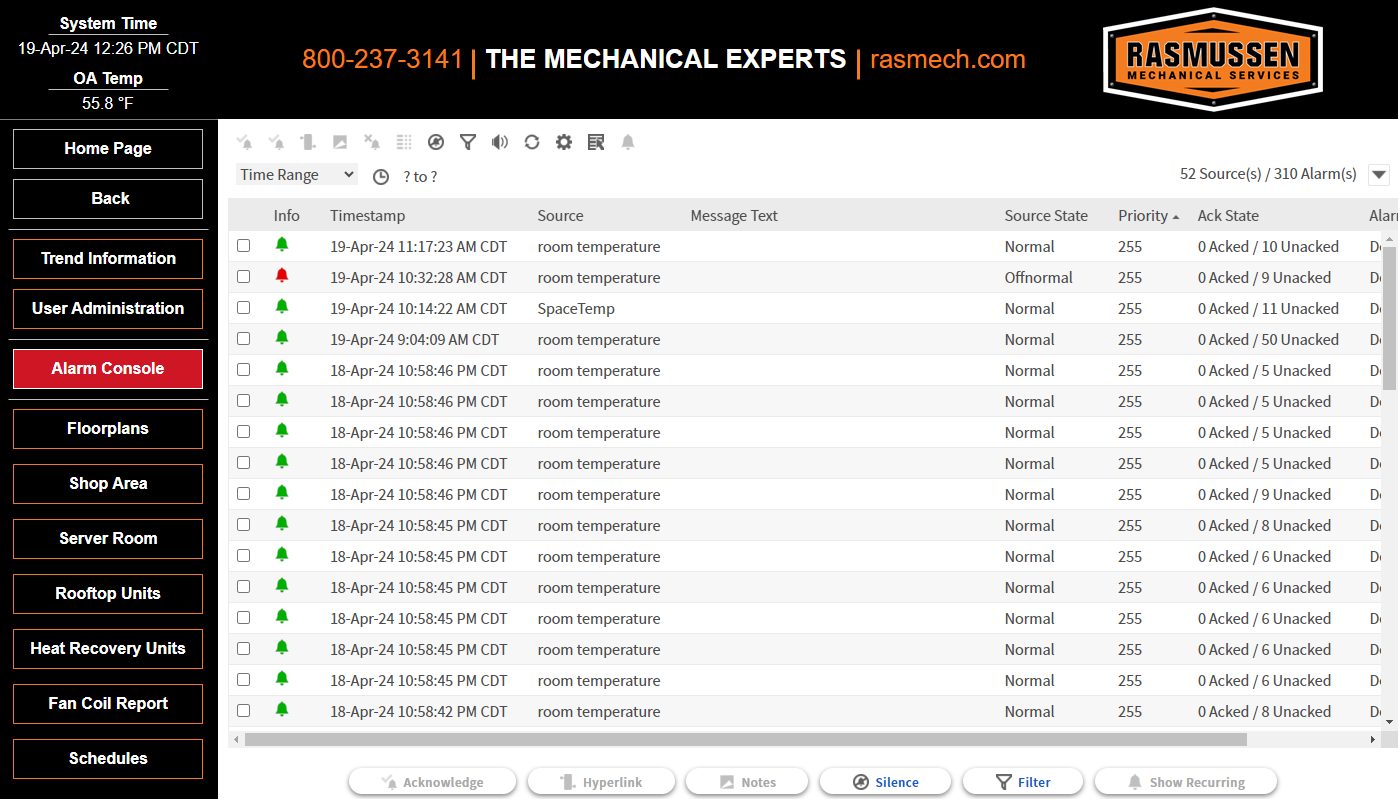 Most BAS upgrades are completed in occupied buildings, and with proper planning, full shutdowns are rarely necessary. Disruption is managed through phased installation, off-hours work, temporary controls during system cutover, and seasonal scheduling where applicable.
The key is proactive coordination between the controls contractor and your facilities team. When the work is planned carefully, occupants may barely notice it’s happening.
Open vs. Proprietary Systems
One of the most consequential decisions in a BAS upgrade is whether to use an open or proprietary system architecture.
Open Systems (BACnet-Based)
Open systems use standardized communication protocols, which means multiple vendors can work on, service, and expand the system over time. This reduces vendor lock-in, makes competitive bidding easier for future work, and simplifies integration with other building systems like lighting, fire alarm, and metering.
Proprietary Systems
Proprietary systems offer a tightly controlled ecosystem, which can simplify some aspects of deployment. However, they limit your service options to a single vendor and typically result in higher long-term costs for maintenance, expansion, and software licensing.
Most modern BAS upgrades prioritize open architecture for the flexibility it provides over the life of the building.
Frequently Asked Questions
 Can you upgrade the controls without replacing mechanical equipment?
Yes. Most bas upgrades focus on modernizing the controls layer while retaining the existing hvac equipment. This approach is cost effective and minimizes system downtime, allowing facility managers to gain greater control and improve performance without a full system replacement.
What’s the difference between BAS and BMS?
The terms are often used interchangeably. BAS typically refers to hvac automation and controls specifically, while BMS may encompass multiple systems including lighting, security, and energy management systems. Modern systems often integrate these functions for enhanced analytics and occupant comfort.
Can pneumatic controls be upgraded to DDC?
Yes, and this is one of the most common and impactful types of BAS upgrades. Pneumatic legacy systems can be replaced with digital direct controls that use open protocols, improving energy efficiency and reducing frequent maintenance issues. Partial upgrades may also use electro-pneumatic transducers as a bridge to new systems.
Is a BAS upgrade worth the investment?
In most cases, yes—especially when considering the benefits such as reduced energy consumption, lower operating costs, improved indoor air quality, and enhanced occupant comfort. Upgrading an outdated bas can help avoid vendor lock-in and future proof your building’s automation strategy. The longer you own the building, the stronger the case becomes.
The Bottom Line
A BAS upgrade is not just a controls update; it’s a comprehensive operational enhancement for your entire building. This upgrade impacts energy use, equipment lifespan, ongoing maintenance, and the daily experience of your facilities team.
Choosing the right approach depends on your budget, timeline, building complexity, and long-term sustainability goals. If you’re unsure where to begin, the essential first step is a thorough assessment of your current system. This evaluation will identify five indicators of system health, reveal what’s working and what isn’t, and help determine whether a partial upgrade or complete BAS replacement is the best path to breathe new life into your aging systems while minimizing disruption and controlling the real cost of your investment.
Schedule a BAS System Evaluation
Rasmussen Mechanical Services specializes in helping facility managers evaluate, design, and implement effective bas upgrades for commercial and industrial buildings. Our expert controls team conducts a thorough assessment of your existing bas system, identifies opportunities to improve energy performance and tenant comfort, defines the optimal scope of work, estimates costs and ROI, and develops a phased plan to minimize disruption and future-proof your building automation strategy.
Contact us today to get started on your bas upgrade journey.