What causes most boiler failures?
Human error and lack of maintenance — not manufacturing defects. Skipped safety-device tests, ignored alarms, trips reset without finding the root cause, and lapsed water treatment sit behind most boiler and pressure vessel incidents. The physical damage those lapses produce usually falls into five root causes: oxygen corrosion, scale, thermal shock, over-firing, and carry-over. Related reading: Common Boiler Issues and Problems We See
Why shouldn't I just reset a tripped boiler and move on?
Because eventually it won't trip — it will fail. A safety trip is a symptom: low water, high pressure, flame loss, or a fuel-pressure problem. Resetting without investigating leaves the underlying condition in place and normalizes it. Investigate every trip, correct the cause, and only then return the boiler to service.
 What does oxygen corrosion in a boiler look like?
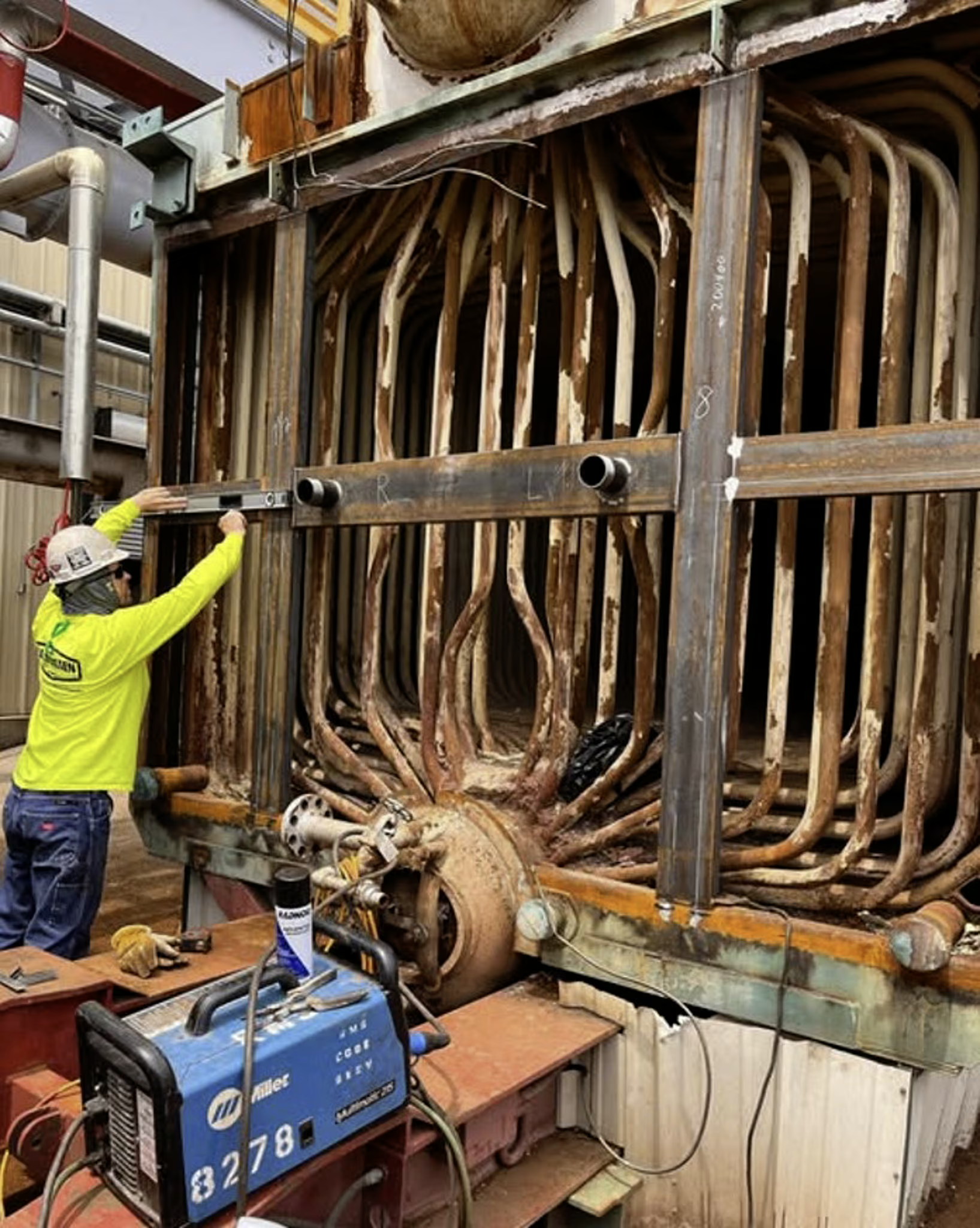
Pitting — steel "eaten away" in localized craters, often with colored caps on the top side of tubes. It concentrates wherever cold, fresh water enters the system: the deaerator, the feedwater piping between the DA and the boiler, and feedwater economizers (it sometimes prefers the weld metal on economizer return bends). Leaks in those locations are the classic symptom. Related reading: How to Fight Boiler Corrosion
How do you prevent oxygen pitting?
Fix the deaerator and the chemistry — both, not one. A properly operating DA delivers feedwater at about 7 parts per billion dissolved oxygen, and a residual sulfite (oxygen scavenger) level reacts with what remains before it can attack steel. The common failure modes are a malfunctioning DA, feedwater too cool for the sulfite reaction to keep up, or an inadequate sulfite residual. Related reading: Deaerator Maintenance: The Complete Guide
What are the warning signs of boiler scale?
Rising stack temperature at the same firing rate (this is why a logbook matters), noticeably more feedwater than steam produced, chalky buildup inside tubes or the mud drum, chunks of scale plugging the bottom blowdown or skimmer lines, and high boiler water conductivity. In watertube boilers, heavy scale ends in a "fish-mouth" furnace tube rupture — a big leak. Related reading: Boiler Scale: The Silent Killer
How much fuel does boiler scale waste?
Per DOE Steam Tip Sheet #7, even 1/32 inch of "normal" scale wastes about 2% of fuel, and high-iron or silica-bearing scale wastes substantially more at the same thickness. Scale insulates the heating surface, so the same output demands higher gas temperatures — raising the stack temperature, stressing the metal, and eventually failing tubes. Related reading: How Boiler Feedwater Quality Can Affect Boiler Operations
How do you remove scale from a boiler?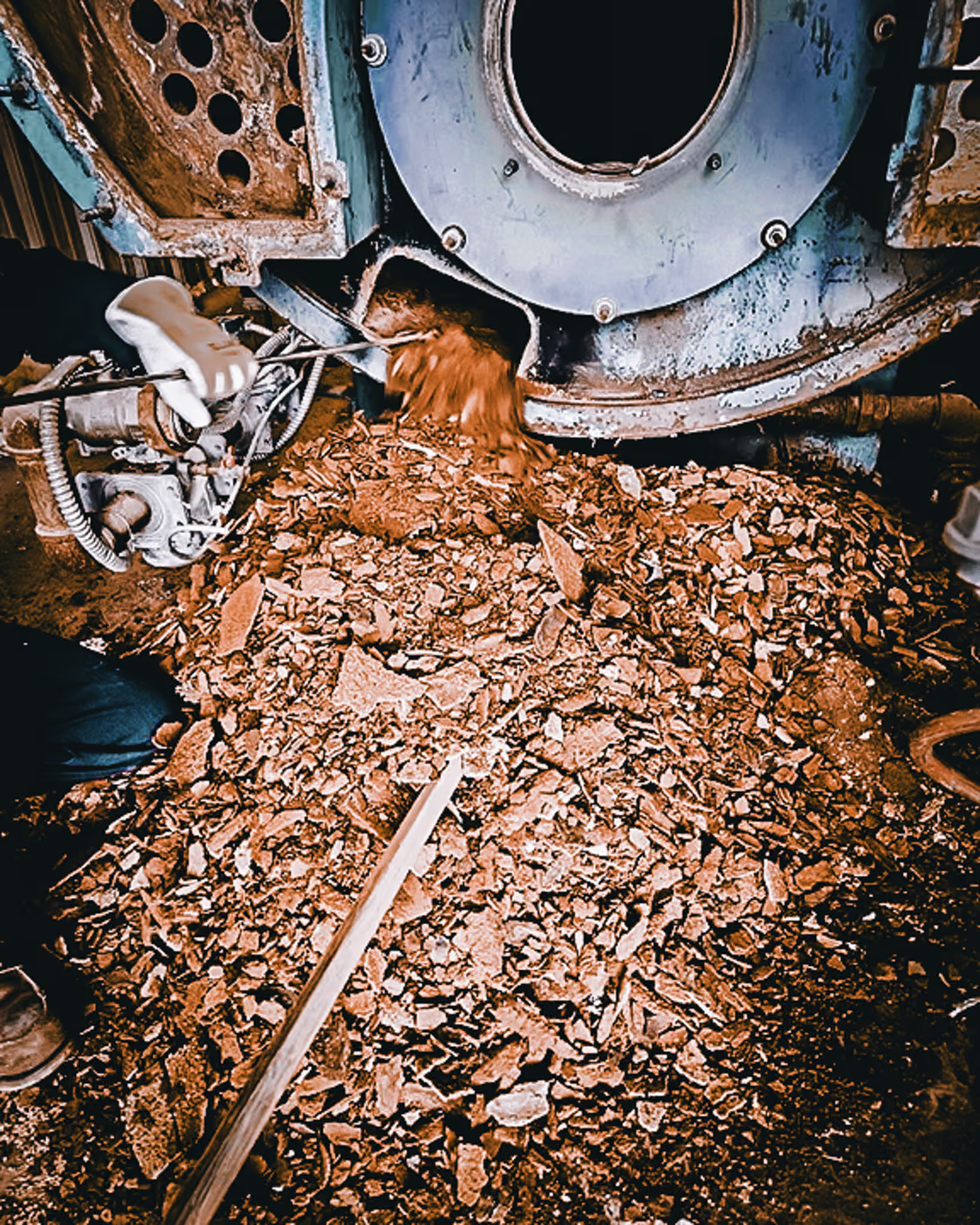
Fix the softener or RO first — descaling is pointless while hardness keeps entering. Scale is then removed chemically or the boiler is retubed in severe cases. Chemical cleaning while running carries a real risk: scale piles up as it releases, so bottom blowdown frequency must increase drastically and a cleaning shutdown should still be planned. In watertube boilers, a pile of released scale can block a tube, starve it of water, and overheat it to failure. Have your water treatment technician present at internal inspections so the program gets corrected, not just the symptom. Related reading: The Importance of Boiler Water Treatment
What is thermal shock in a boiler?
Damage from uneven or too-rapid heating and cooling. A 10-foot boiler tube heated 100°F grows about 1/16 inch; if that growth is constrained, it generates roughly 10,000 pounds of force per tube. The visible results are leaking tube rolls and cracked, falling refractory — refractory is less flexible than steel, so it cracks first. Boiler scale and fast startups or cooldowns are the usual culprits.
How fast can you heat up or cool down a boiler?
Most manufacturers recommend a maximum warm-up and cool-down rate of about 100°F per hour. Hold at low fire until the boiler is steaming (or per the O&M manual), and never force a fast cool by running the blower or venting steam pressure — both create damaging thermal gradients. A low-fire hold switch, a written procedure, and operator training are cheap insurance. Related reading: Getting Your Commercial Boiler Ready for Shutdown
What are the signs of an over-fired boiler?
Over-firing is hard to pin down, but the signatures are burned or crystallized tubes in the turning lane, tube leaks in the furnace or turn lane with no scale present, and flame impingement on the target wall. Causes include a burner out of tune or set too high, loose linkages, a damaged burner passing too much gas, a malfunctioning gas regulator, or a flow meter that's lying. The fix is a qualified burner tune — and verifying actual gas flow at high fire, meter calibration included. Related reading: Burner Tuning: Expert Guide to Optimizing Performance
What is boiler carry-over and what causes it?
Carry-over is boiler water leaving with the steam, taking dissolved solids with it. Symptoms: water hammer, steam-pipe erosion, low-water trips, pressure-reducing valves plugged with boiler solids and chemicals, high condensate conductivity, and much more feedwater than steam flow. Causes include a high operating water level, foaming (too much chemical, process contamination, or high TDS), swell from surging loads, and — rarely — broken boiler internals. It also strips BTU content from the steam at the point of use. Related reading: Boiler Carryover: Everything You Need to Know · 7 Critical Steam Piping Tips for Facility Managers
What is boiler swell?
A false high-water event triggered by sudden steam demand. Load comes on fast, header pressure drops, the boiler ramps to high fire, and the lower pressure flashes boiler water — the level rises from steam bubbles, not added water. The feedwater valve closes on the "high" level while the burner fires at 100%. When the swell collapses, the level crashes faster than feedwater can recover and the boiler trips on low water. If the low-water cutoffs aren't functional, the upper tubes can dry-fire — a genuinely dangerous condition. The fix is bringing loads on slowly. Related reading: Low Water Boiler Conditions: Avoiding Boiler Catastrophes
Why is my boiler using more feedwater than the steam it makes?
That gap means water is leaving somewhere other than the steam header — usually a tube leak or carry-over. Check the exhaust temperature trend: high stack temperature points to scale or soot buildup, while a sudden drop suggests a leak quenching the gas path. High condensate conductivity points to carry-over. Either way, investigate now — this is the symptom that precedes failures. Related reading: Boiler Inspection Guide